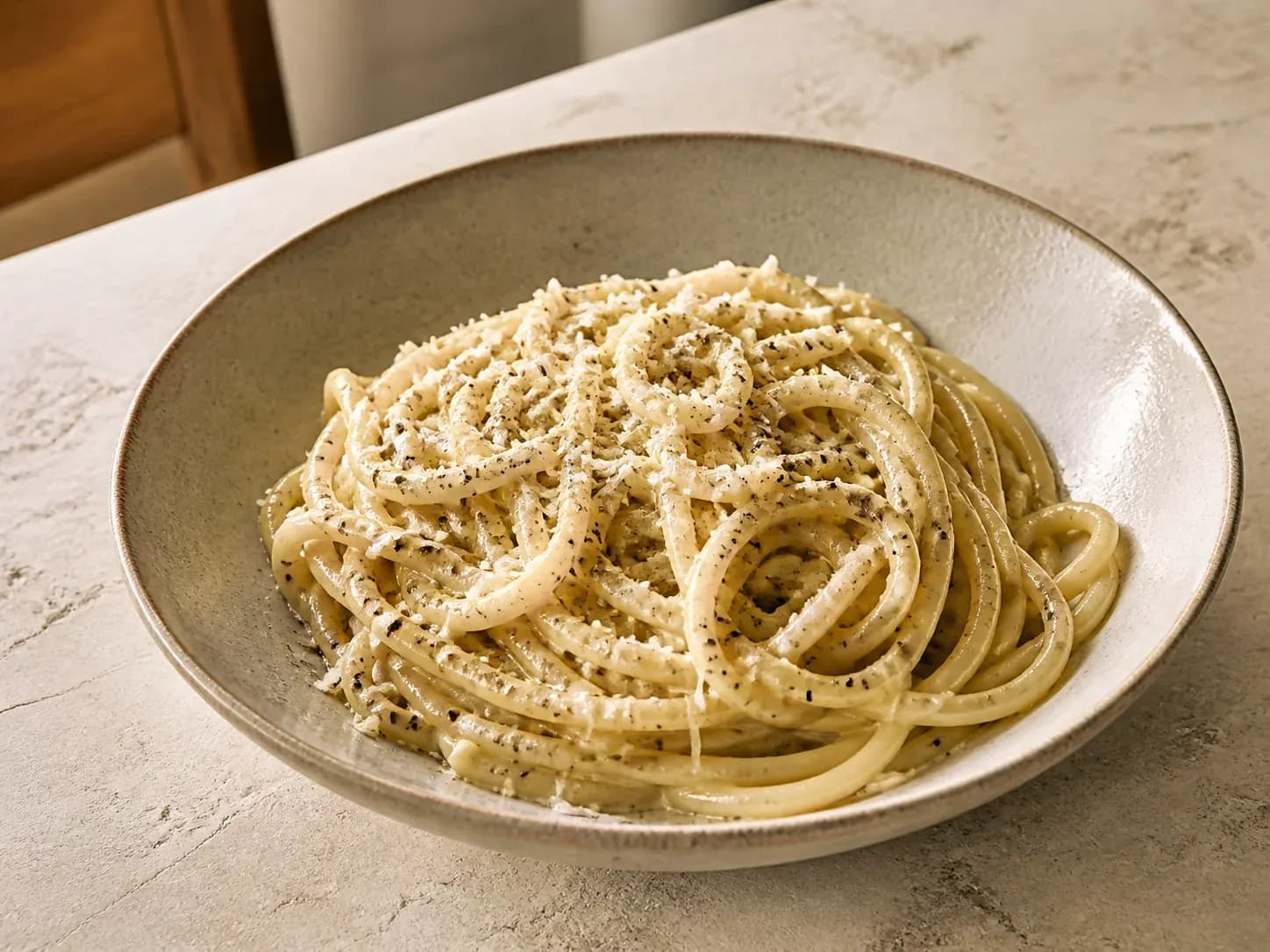
Cacio e Pepe
Cacio e pepe is built from pasta, Pecorino Romano, black pepper, and starchy water. The challenge is temperature control: the cheese must emulsify without clumping.
By Cookimoki Editorial Team · Updated
Photo: AI-generated for Cookimoki · Cookimoki-owned AI-generated image
Ingredients
Check ingredients you already have, then copy the remaining items for shopping.
Instructions
- 1
Toast the pepper. Warm the crushed pepper in a wide dry skillet over medium heat for 60–90 seconds, then add 120 ml water and lower the heat.
Look for: The pepper smells floral and fragrant but is not smoking.
- 2
Cook the pasta shy of al dente. Boil the pasta in lightly salted water. Move it to the pepper skillet 2 minutes before the package time, reserving at least 240 ml pasta water.
Look for: The center is still firm enough to need another 2 minutes of cooking.
- 3
Finish in the pepper water. Toss the pasta over medium-low heat, adding small splashes of pasta water until it is al dente and a thin starchy coating forms.
Look for: The water looks glossy and lightly thickened rather than soupy.
- 4
Emulsify off the heat. Let the pan cool for 45–60 seconds. Add the Pecorino in several additions while tossing vigorously, loosening with warm—not boiling—pasta water as needed.
Look for: The cheese forms a smooth coating with no rubbery strings or grainy clumps.
Tips & Variations
- →Grate the Pecorino as finely as possible so it disperses quickly.
- →If the pan is visibly steaming hard, wait before adding the cheese.
- →Serve immediately; the sauce tightens as it cools.
Your cooking notes
Private to this device and available offline.
Common mistakes & troubleshooting
- The cheese formed clumps.
- The pan was probably too hot. Move fully off heat and add the cheese gradually with warm pasta water.
Dietary & allergen notes
Contains: Milk, Wheat
Pecorino Romano contains milk; standard pasta contains wheat.
Allergy information is ingredient guidance, not a guarantee against cross-contact. FDA allergen guidance
Storage & reheating
- Refrigerator
- Best eaten immediately; refrigerate leftovers promptly for up to 2 days.
- Reheating
- Reheat gently with a spoonful of water; the sauce will not be as silky as when fresh.
Cultural context
Cacio e pepe is closely associated with Rome and the Lazio region. Its short ingredient list makes technique and ingredient quality especially visible.
This short note provides context, not a complete history; regional and family traditions vary.
Sources & further reading
- La Cucina Italiana: The Definitive Guide to Cacio e PepeSupports the Lazio context, Pecorino choice, pepper-water method, and common clumping problem.
Recipe credits
- Published
- Sep 2, 2026
- Last updated
- —
Editorial research draft. This recipe must be kitchen-tested, photographed, and reviewed before publication.